Istanbul, Türkiye · Water
Istanbul Bosphorus &Black Sea with Swimming on Yacht
- Duration
- 5 h
- Start times
- 12:00
- Guide languages
- EN
- Group size
- up to 30 guests
- Cancellation
- Free cancellation up to 24 hours before
About this experience
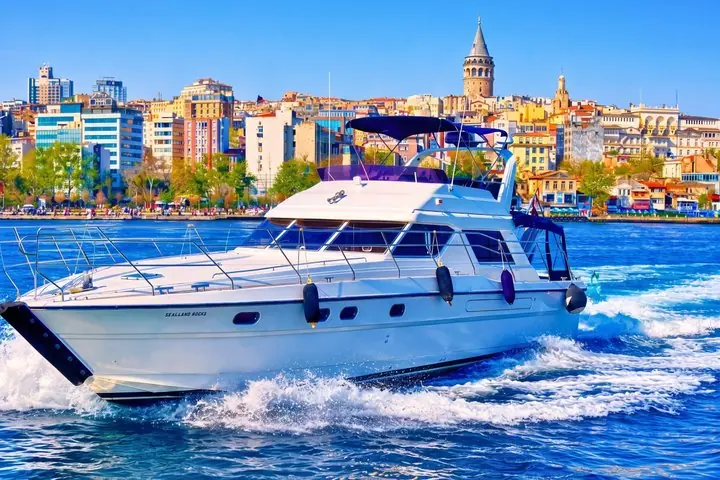
Step aboard a luxury yacht and set sail on an unforgettable five-hour journey along the Bosphorus, extending all the way to the Black Sea. Accompanied by a professional guide, discover Istanbul’s most iconic waterfront landmarks before reaching the tranquil northern shores.
Enjoy a relaxing stop in Anadolu Kavağı, where a delicious seaside lunch awaits, complemented by soft drinks and fresh seasonal fruits served on board. During the summer months, take the opportunity to swim in a beautiful, secluded cove—an experience that blends comfort, scenery, and exclusivity into one exceptional cruise.
As you cruise further north, watch the coastal landscapes. Pass beneath the Bosphorus bridges, admire Ottoman-era waterfront mansions, and witness the meeting point of two seas at the Black Sea entrance. With limited guests on board, the atmosphere remains intimate and refined, allowing you to fully relax, enjoy attentive service, and experience the Bosphorus in a way few travelers ever do.
Schedule
Start times: 12:00
- Stop 1
Istanbul is a bridge between Europe and Asia, the Black Sea and the Mediterranean, a position that endows it with one of the most unique and beautiful settings in the world. For, between the hills on the European and Asiatic shores flows the Bosphorus, the brightest gem in the diadem of nature. "This beautiful strait, sometimes spelled Bosporus and sometimes Bosphorus, was so called from the earliest ages by the ancients; from the mythology of 10, the mistress of Jupiter, having passed over it in the shape of a cow. It resembles the Dardanelles, in length, breadth and current, and like it, is a narrow separation which divides Europe from Asia; but it has many features familiar to itself. Instead of being a solitary stream running between deserted shores, it is a body of water full of life and animation, winding its way through banks covered with palaces and villages, shaded with magnificent forest trees, presenting to the eye, at every mile, a new scene of crowded existence."
- Stop 2
Dolmabahce Palace It stands on the European shore of the Bosphorus and the with its various dependencies forms almost a little town, its gardens extending for a mile or more along the water's edge. Though the exterior of the Dolmabahce Palace, built by Sultan Abdülmecit () exhibits a variety of architectural styles, mainly baroque, and is decorated with a profusion of ornament, the general effect is not unpleasing, and the site is remarkably well-chosen. The heart of thePuildiny is chandeliers and a musician's gallery. Its interior, like that of other palaces, glitters whith gilded decorations, costly chandeliers and mirrors, priceless porcelains and gorgeous brocades of gold and silver tissue. The vast gardens were originally laid out by European landscape architects and comprise parterres and fountains. Built by architect Balyan Usta in 1853, the palace has a 600 metres long marble pier and landing stages that run splendidly along the Bosphorus, whilst access from the land is through beautiful tall Baroque gates.
- Stop 3
The Dolmabahçe Mosque is a mosque in Istanbul, Turkey. It was commissioned by queen mother Bezmi Alem Valide Sultan.
- Stop 4
Which was inaugurated on October 29, 1973 on the fiftieth anniversary of the Turkish Republic, has the longest span in Europe and the fourth in the world. This suspension bridge has a total length of 1560 metres (1706 yards) and a width of 33.4 metres (110ft). The span between pylons is 1074 metres (1175 yards) and the clearance above sea level is 64 metres (210ft). The constrnction of the steel box-girder suspension was carried out by a British-german consortium. The second bridge to link Europe and Asia over the Bosphorus will be completed in 1989 between Emirgan and Kanlica.
- Stop 5
Bosphorus Through The Ages Istanbul has no rival anywhere. It spells adventure. It has the ingredients that unite to create glamour, excitement and mystery. Centuries of invaders have been intrigued with this magic and majestic city with its 340 Byzantine columns, 500 mosques, fabulous palaces, fountains, cisterns, baths, churches, wells and covered bazaars. NO city on earth has so many old buildings of beauty and distinction. Istanbul is no myth. Its reality lies in its extraordinary history that goes back through countless phases to the first colonisation in 657 BC by the Megarians who named it Byzantium after their commander Byzas. The Roman Emperor Constantine elevated Byzantium to the capital of the Eastern Roman Empire in the third century AD and renamed it Constantinople after himself. The Turks finally brought the Eastern Empire to an end when they burst through the city walls in 1453 and established Constantinople as capital of the Ottoman Empire.
- Stop 6
Bebek is a historic Istanbul neighbourhood that falls within the boundaries and administration of the Beşiktaş district. It is located on Bebek Bay along the European shores of the Bosphorus strait and is surrounded by similarly affluent neighbourhoods such as Arnavutköy and Etiler.
- Stop 7
Ortaköy is a lively area centered on its waterfront square, where crowds gather to listen to impromptu concerts or sip tea on cafe terraces. Stands serving waffles or kumpir (stuffed baked potatoes) share busy alleys with souvenir stalls. The ornate, light-filled Ortaköy Camii mosque sits at the water’s edge in the shadow of the Bosphorus Bridge. After dark, upmarket restaurants and clubs nearby draw a chic crowd.
- Stop 8
The Fatih Sultan Mehmet Bridge, also known as the Second Bosphorus Bridge, is a bridge in Istanbul, Turkey spanning the Bosphorus strait. When completed in 1988, it was the 5th-longest suspension bridge span in the world; today it is the 24th.
- Stop 9 · 45 min
Anadolukavağı, also known as Anadolu Kavağı, is a neighborhood of Beykoz district in İstanbul Province, Turkey. "Anadolu" is the Turkish name for Anatolia, and "Kavak" means "control post" in Ottoman Turkish referring to the strategical position of the location on the Bosporous.
- Stop 10
The purpose of the castle, located in Beykoz, is to protect the Black Sea entrance of the Bosphorus. Although it is known as Genoese Castle in most sources, it is understood that it was built by the 8th Byzantine Emperor Mihael Palaeologos, according to the information in the inscription. It is believed that it may have taken its name from Oros, which means mountain and hill in Greek. Yoros Castle has been closed for a long time. But you can also enjoy the view of the 3rd Bridge with a view of the Bosphorus and some climbing.
- Stop 11
Rumelishisari Fortress - (Rumelihisari Castle) At the narrowest point of the Bosphorus stands the Rumelihisarr Fortress, built by Sultan Mehmet, the Conqueror on the European shore. The Sultan himself on the 26th day of March 1452 laid the foundation stone of the Fortress with a view to controlling the passage of the ships through the Bosphorus and using it as a base for his attack on the city. The fortress or castle was built upon the ancient site of Hermaion. It was completed in five months on August 28th 1452. The cannon on the towers could command this narrowest part of the Bosphorus opposite the older fortress of Anadoluhisarr. Darius in 500 BC had thrown a pontoon bridge across the Strait at this point and passed over 700,000 men. To Sultan Mehmet, the Conqueror, it was the key to Constantinople. The design of the walls and the towers display the Prophet's and the Conqueror's name - Muhammet - Mehmet.
- Stop 12
Beylerbeyi Palace Situated on the Asiatic shore of the Bosphorus between the villages of Kuzguncuk and Cengelköy, the palace was built by Sultan Abdülaziz in 1865. Beylerbeyi Palace seen from the Bosphorus floats like a white vision in a fairy tale. It is the most extravagant royal house of the 19th Century on which millions were spent. It is built completely of marble, surpassing all the Palaces of European Kings. Empress Eugénie, during her visit of 1869 stayed in this palace as well as Czar Nicholas Il of Russia. Edward VIII was a guest in 1936. Stone lionesses recline on marble carpets set in lawns, and swans float and fish swim in the unobtrusive pool where pigeons fly to catch the spray of the fountain upon their wings. Miss Pardoe, on her visit to the Palace, was so impressed with its Imperial Bath, that she wrote:
Included
- Black Sea swimming break (summer months)
- Professional English-speaking guide
- Light snacks and seasonal fruit
- Air-conditioned vehicle for transfers
- 2-course sit-down lunch
- Hotel pickup from Fatih and Taksim areas
- Bottled water, coffee, and tea
Not included
- Alcoholic beverages (available for purchase)
- Hotel drop-off (ends at meeting point)
- Towels and swimwear
- Gratuities (optional)
Requirements & restrictions
- Ages: Infants 0–2, Children 3–11, Adults 12–70 years
Good to know
- Infants and small children can ride in a pram or stroller
- Public transportation options are available nearby
- Suitable for all physical fitness levels
- Guests who wish to swim are recommended to bring swimwear, a towel, and personal essentials. Basic changing facilities are available on board for your convenience.
Meeting point
Hotel pickup or an exact meeting point in Istanbul, confirmed after booking.
Cancellation
For a full refund, cancel at least 24 hours before the scheduled departure time.